Article by Nigel Hobden – sourced December 2025 newsletter
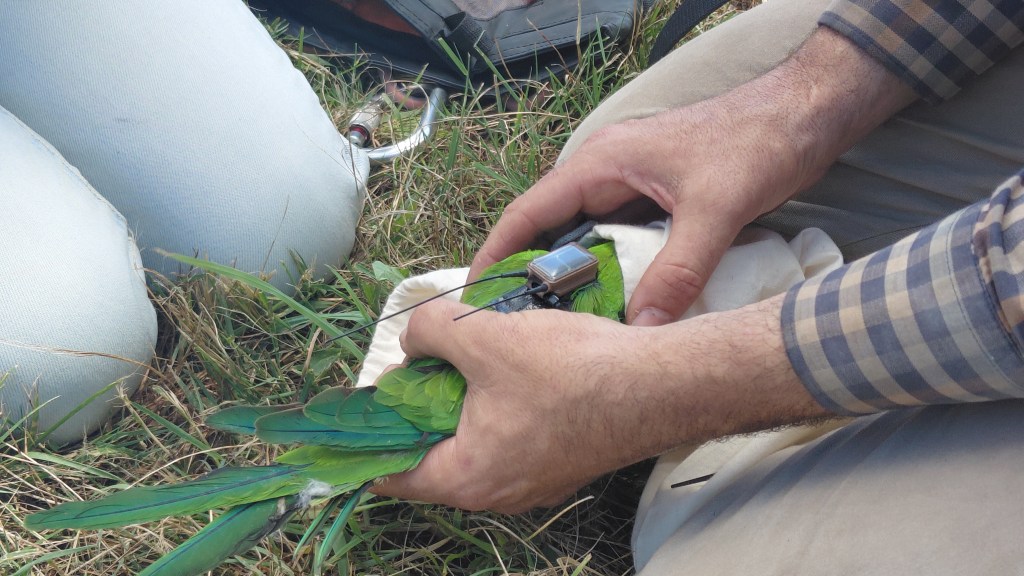
On Tuesday 25 November a team of researchers from Australian National University, Canberra, visited Orange to undertake annual monitoring of Superb Parrots at Bloomfield Park. Nigel, keen as to learn more about our Superb Parrots, took the opportunity to meet the team and observe the capture of adult birds.
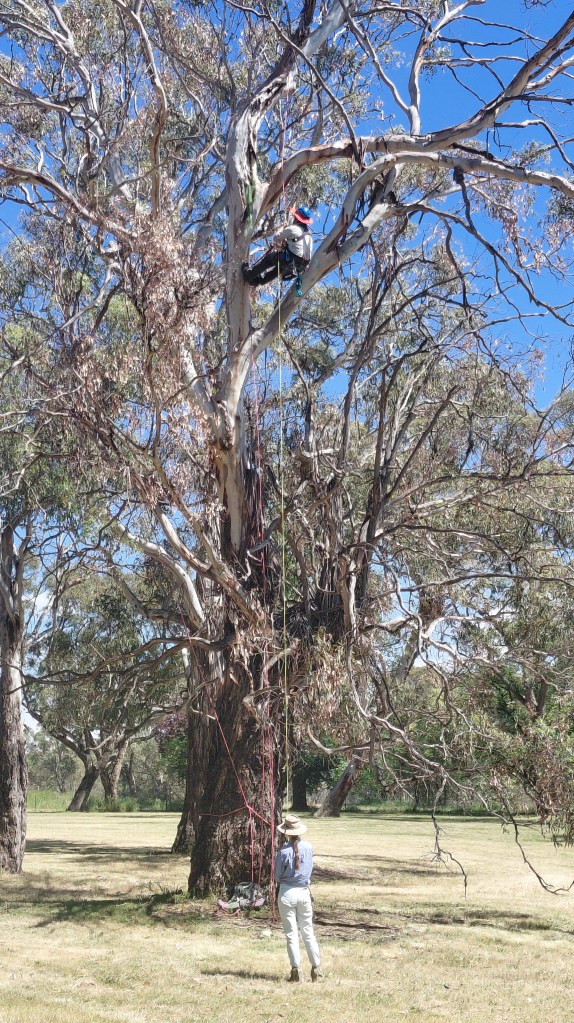
The team lead by Daniel firstly observed trees for potential nesting hollows, then waited patiently for parent birds to fly in to feed chicks. The waiting period could be up to 3 hours! Once nesting sites were confirmed, climbing ropes were established using slingshots.
The team checked out previously known hollows and unfortunately, one hollow had been raided and taken over by Rainbow Lorikeets who had killed the female Superb Parrot. This is an unfortunate consequence of the ability of some native species to adapt and spread beyond their identified home range, often because of human intervention.
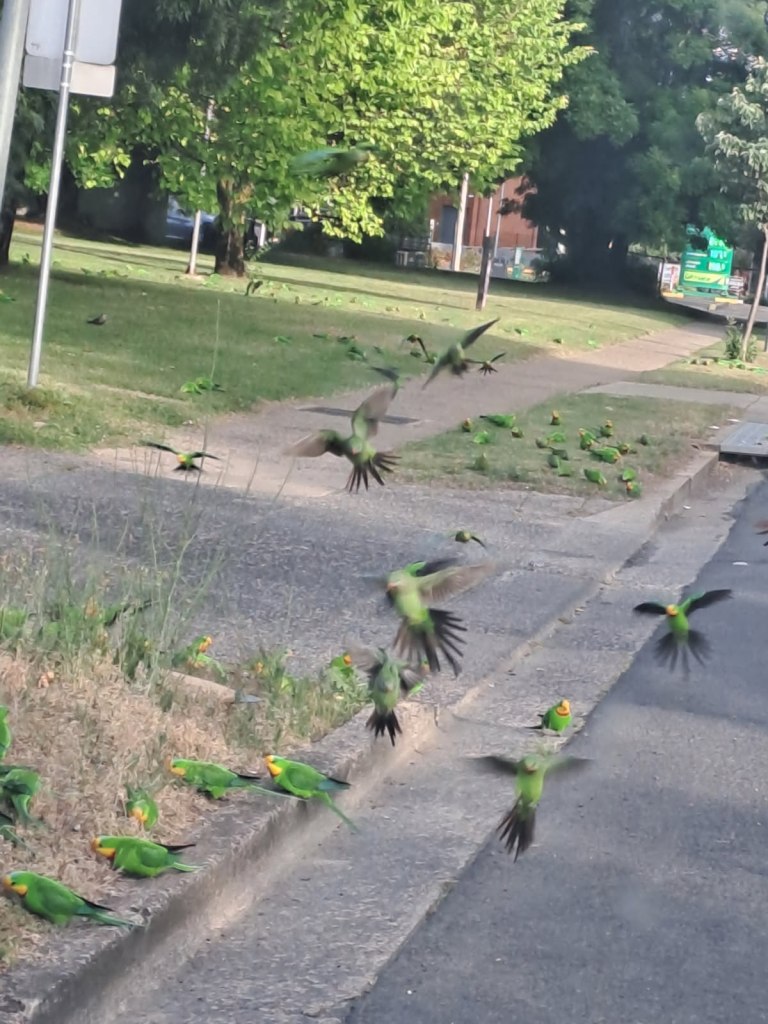
The number of nest sites this year was down considerably on previous years. Strange, when colleagues at Council had taken photos of nearly one hundred Superb Parrots feeding at
Total Park on Bathurst Road (below) around the 17 November. Daniel assumed there was a significant percentage of the population that was non-breeding.
This year the team were looking to gain information on feeding grounds that the adult birds used and development rates of chicks. The closer and better the feeding ground it is presumed the more rapid would be the development of the chicks.
To enable this research one adult bird from a nest was captured, weighed, wings measured, blood sample taken and then a radio tracking device was installed. Due to the short duration of the research period radio tracking devices were installed using tape. The back feathers were carefully parted, and tape was stuck to the feathers and then the tiny radio tracking device secured to the tape harness using cable ties. Each bird’s weight was checked to see that it would be able to manage carrying the radio tracking device.
Once the back feathers of the bird were shed so too would be the radio tracking device. The birds would normally lose their back feathers within a period around 4 to 6 weeks.
The tracking will enable researchers to see where birds fly to for feeding, whether it be multiple sites or just a couple; observe the number of return trips each day and then gauge the development of chicks.
 Orange Field Naturalist & Conservation Society Inc.